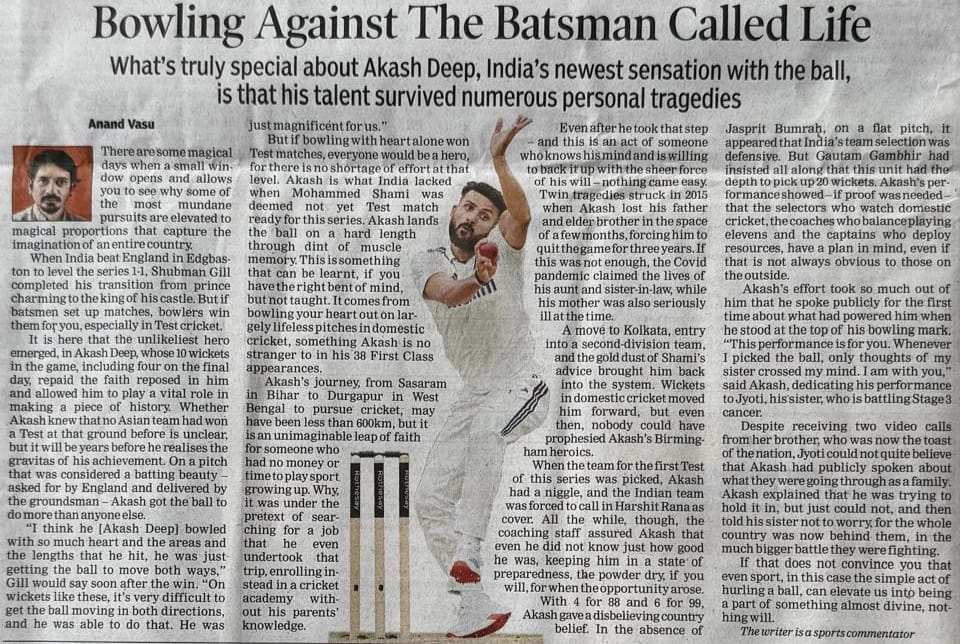
Have you ever seen a father competing or trying to reach out to the potential of his own son? Yes, I am that proud father gripped with quiet rivalry, straining to unlock the alchemy that propelled Partth to scale such unfathomable heights!!
The Midnight Shake-Up
But it does not end here; it actually begins here. Every day, when I see myself lagging on some front or the other, it shakes me up, disturbs me, and wakes me at midnight with one goal: to find the GuruMantra that gave my son the Midas Touch.
A Front-Page Story that gripped me and demanded Three Reads
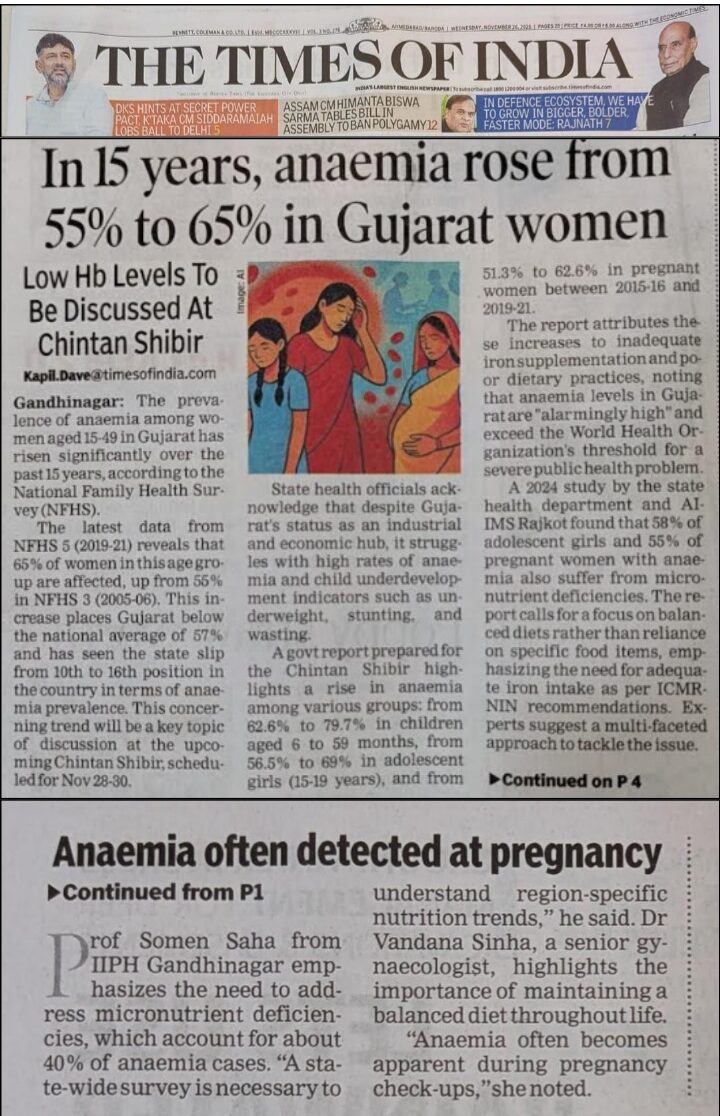
It begins with small shocks. A Times of India front-page headline will stop me in my tracks: “In 15 years, anaemia rose from 55% to 65% in Gujarat women.” I read it three times. The numbers are simple, the sentences plain, and yet they keep unspooling inside me like a puzzle I can’t let go of. Why are we still circling the same problem? Why are we still naming anemia, again and again, without asking why?
Spotting the Hidden Risk
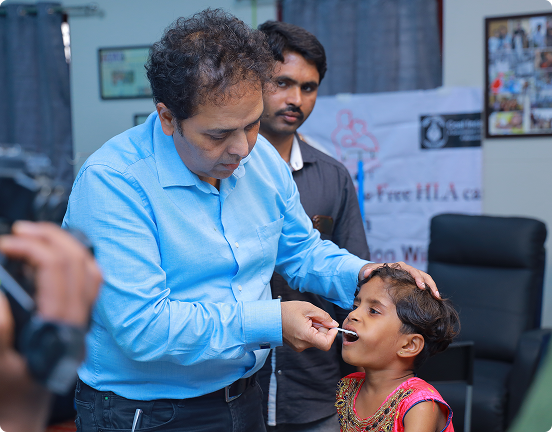
Partth used to ask the why. Long before most of us knew to look, he trained his eyes on details that other people pushed aside. While many fixated on hemoglobin alone, he looked at the subtle fingerprints left in the lab report, i.e., the small letters and numbers that whisper the truth if you know how to listen. MCV. MCH. RDW. These are not cold abbreviations to him; they were clues. He would say: Don’t label everything ‘iron deficiency’ and move on. Look again. Check the family history. Run HPLC if the patterns don’t fit. Screen the carriers.
A Campaign that broke The Script
He turned observation into prevention. He founded The Wishing Factory to bring joy to those already living with thalassemia, but he quickly shifted to stopping new cases before they began. He taught everyone to read reports the way a detective reads a page of evidence. That’s the sort of thinking that makes people uncomfortable because it digs into other causes, into genetics, into difficult conversations about carrier status. When he launched his #aadhiwalizindagimitao campaign, a raw, honest conversation about the half-lives thalassemia warriors live, often only reaching 25 – 30, many in the circuit were only talking about blood donation. Partth opened doors that some considered taboo, and he did it with a tenderness that shut down backlash before it could start.
That was Partth: way ahead of his time.
So when newspapers tell me that Anemia is rising AGAIN.
I feel that same midnight ache. Are we treating the symptom and not the cause? Is the answer hidden in poor diets, in micronutrient gaps, in mental health, or in genetic disorders that show up as low hemoglobin but aren’t iron deficiency at all? The headlines lump everyone into one box and call it progress when we politely nod and move on. Partth would not have let us move on.
The Relentless Pursuit
I have spent five years retracing his path; opening drawers, reading diaries, scrolling through chats, piecing together the landmarks of his thinking. Every saved clipping, every note, every lab report is a breadcrumb. They show how he connected dots others ignored. But the secret still feels elusive, like the final stroke a master craftsman keeps in his pocket.
If this blog has a plea, it is simple and stubborn:
Let us stop flattening the story. Let us stop treating anemia as a single villain with one easy remedy. If we are serious about the numbers we read in the paper, then we must be relentless in our curiosity. We must demand that anemia is not a catch-all diagnosis. We must push for screening that separates iron deficiency from genetic carriers, for training that teaches doctors to notice that a low MCV or a peculiar RDW pattern might mean something altogether different.
A Light He Left…
There is one memory I carry everywhere like a compass. Just before he passed away, in a small, whispered moment, he looked up and said to me, “Papa, light on karo na.” These words have become a metaphor I live by… and ever since, I’ve been searching for that light – not in switches or lamps, but in hearts that still believe in tomorrow.
So now every time a headline makes my heart tighten, I read it the way he taught me to read: slowly, insistently, looking for the small things everyone else missed. By asking, again and again, WHY?
So maybe the Midas Touch is less about golden results and more about the gold of attention and paying it where others glance away.
– Rajesh Thakur,
A father who keeps searching for the light his son left.