I am writing this not only in my capacity as a social worker, but also as someone who has seen the anguish families go through when their children are diagnosed with thalassemia and related conditions. More than anything, I have seen mothers lose their children in adolescence or adulthood – just when they had started placing their hopes in them, their education, careers, independence, and future. And then, one fine day, they are gone, sometimes without the family ever receiving a clear-cut explanation of what actually happened.
For years, we have been telling society and policymakers:
आधी वाली ज़िंदगी मिटाओ….एक आत्मनिर्भर भारत तो तभी होगा न, जब शरीर में खून खुद ही बनेगा, है न? थैलेसीमिया मुक्त भारत ही तो विकसित भारत कहलाएगा।
This is not merely a slogan. It comes from witnessing a reality in which many people living with thalassemia leave us before they have had the opportunity to live a complete life. They have dreams of education, work, family, independence, and dignity, just like anyone else. Yet somewhere along the way, those dreams are cut short.
Over the last five years, I have witnessed more than 46 deaths. A large proportion of those we lost were between the ages of 19 and 30. We look for the cause behind every death. But too often, there is no clear-cut answer. What remains is an unbearable S I L E N C E and one question from the family: “Could this have been prevented?”
And sometimes, the only explanation they receive is: “What exactly happened was never told to us….! The Doctors just said, because they are K/C/O Thalassemia, so we should expect anything!” Period.
A Death That Shook Us
The recent death of Hiral Shah has made us reflect on this question once again.
Hiral had Non-Transfusion-Dependent Thalassemia (NTDT). For nearly eight or nine years, she had not required blood transfusions. She did not require regular transfusions or, as far as we understood, have the usual transfusion-related complications. However, her serum ferritin level, which was around 5,400, was a concern for her treating haematologists. She was being given Deferasirox to bring the levels down, but it was taking time.
And yet, that life was lost.
Hiral’s death reminds us that thalassemia cannot be understood simply as a condition that requires blood transfusions. Even people with NTDT can develop serious complications and therefore require appropriate and regular medical monitoring. These may include an increased risk of blood clots, pulmonary hypertension, extramedullary haematopoiesis, liver-related complications and gallstones, among others.
Being non-transfusion-dependent does not mean being risk-free. Every person living with thalassemia needs appropriate long-term, specialist-led follow-up. And whenever a young person dies unexpectedly, we must be willing to ask what could have been identified, monitored or managed earlier.
We Are Trying to Treat the Disorder, Not Prevent It
And in fact, many feel that they are doing right! When they know fully well that PREVENTION is always Better than CURE.
Today, substantial resources are being spent on the treatment of thalassemia – blood transfusions, iron chelation therapy, management of complications, and, for eligible patients, bone marrow transplantation. These treatments are necessary, and we must continue to make them accessible.
But we must also ask a difficult question: “Are we spending enough on preventing thalassemia in the first place?”
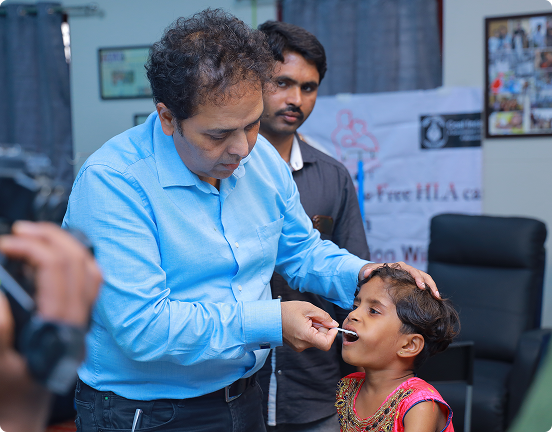
We have built systems to treat the disease after a child is born with it. Prevention asks us to intervene much earlier, through carrier screening, genetic counselling, timely prenatal diagnosis and trained healthcare professionals.
Bone marrow transplantation can be life-changing for some individuals, but it is not suitable for everyone. It can be expensive, complex and inaccessible to many families. More importantly, it treats a person who has already been born with thalassemia.
Prevention allows us to act before that point.
If even a portion of the enormous resources spent on lifelong treatment and management were strategically invested in scientifically sound prevention programmes, we could potentially protect many families from the physical, emotional and financial burden of thalassemia.
This is not about choosing prevention over treatment. We need both. But prevention has to receive the same seriousness, planning and investment that we give to treatment.
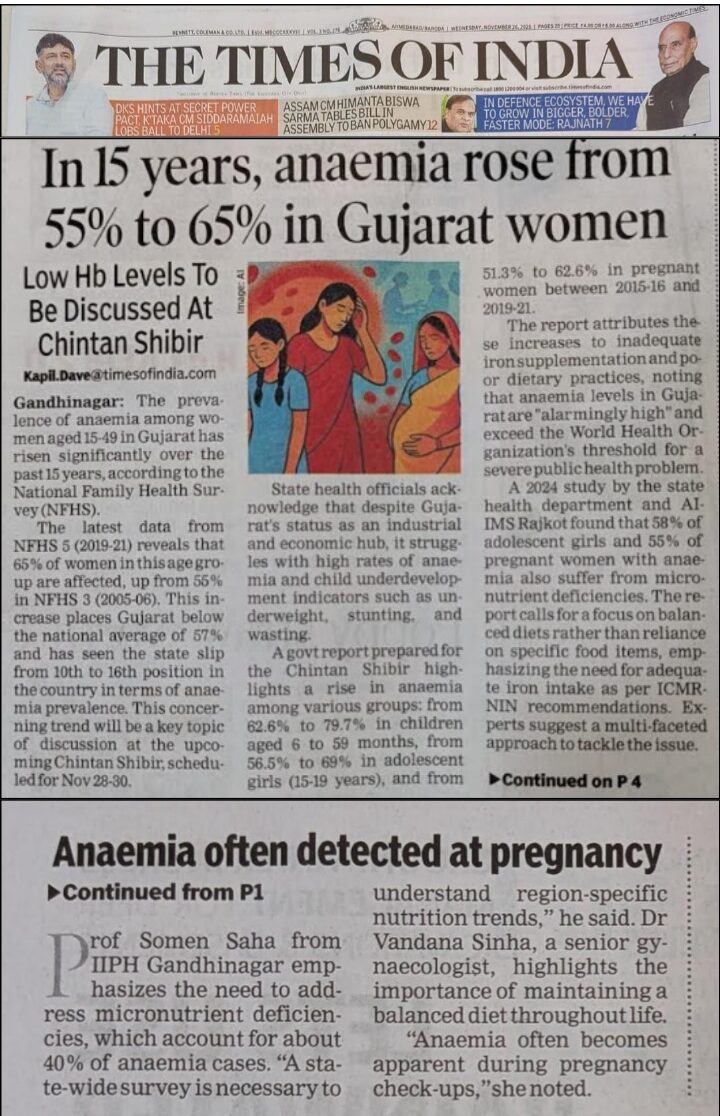
There is also a higher public-health and economic cost. Thalassemia can mean decades of transfusions, medicines, investigations and management of complications. In rural India, the problem becomes even more difficult when diagnosis and documentation are inadequate, and deaths may be attributed to severe anaemia or other complications without the underlying condition being properly identified.
From Policy to the Ground
India has already recognised the importance of thalassemia prevention. The National Thalassemia Policy and NHM guidelines include measures such as screening, genetic counselling and prenatal diagnosis for couples at risk. The challenge now is implementation – taking these provisions to the district, primary healthcare, and community levels, rather than limiting prevention to specialised centres in larger cities.
A Practical Model for Prevention
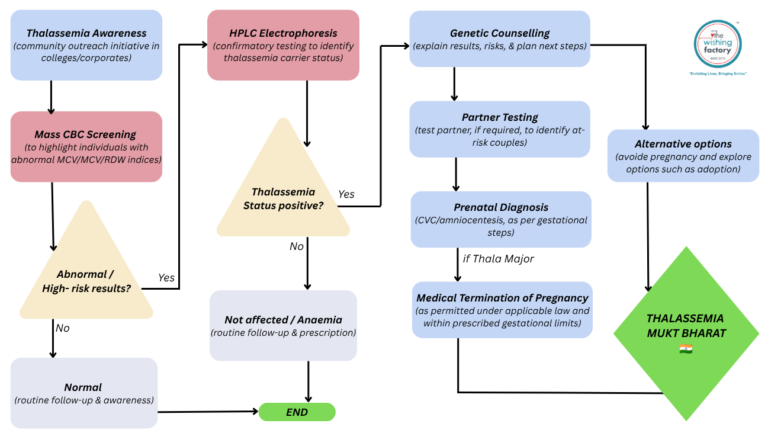
Prevention needs to begin much earlier than the point at which a child is diagnosed with thalassemia. It requires a coordinated continuum of awareness, screening, counselling, diagnosis, referral and follow-up.
For this system to work, every link in the chain must be strong. Gynaecologists, pathologists, paediatricians and other clinicians must be trained to spot suspected cases early and refer them without delay. Equally critical are our grassroots heroes, ASHA workers, Anganwadi workers, and Community Health Officers, who drive awareness, enable referrals, and ensure follow-up in the last mile.
But prevention cannot end at birth. Children and adults living with thalassemia, including those with NTDT, need consistent specialist monitoring and lifelong care. At the state level, robust registries that track cases, complications, and deaths are essential to uncover gaps in care and understand why young lives continue to be lost.
Prevention is not just screening. It is a continuum: awareness, screening, counselling, early diagnosis, timely referral, prenatal diagnosis, follow-up and sustained medical support. Only when every element works in sync can we meaningfully reduce the burden of thalassemia.
Prevention can also reduce the long-term burden on the exchequer, blood centres and medicine supply systems, particularly by reducing the number of new cases requiring lifelong transfusions, medicines and ongoing clinical management.
What Does a “थैलेसीमिया मुक्त भारत” Mean?
A “Thalassemia-Free State” cannot simply mean a state where patients have access to treatment. Treatment will always remain essential, but a truly prevention-focused state must also actively work towards reducing new cases while ensuring that those already living with thalassemia receive quality and continuous care.
It should mean accessible screening and counselling, prenatal diagnosis, regular monitoring, strong referral networks and continued awareness across schools, colleges and communities. It should also mean that we are willing to examine every major complication and death and ask whether something could have been identified or prevented earlier. Only then can we say that we are not merely treating thalassemia, but preventing it.
An Appeal to Policymakers @narendramodi
Our humble but firm appeal to policymakers is simple: Please make prevention – not a minor component of treatment, but a central pillar of health policy.
We are not against bone marrow transplantation. We support every treatment that saves a life, every transfusion that keeps a warrior alive, and every medicine that prevents or manages a complication. But if a family can be protected from reaching that stage in the first place, should our efforts remain focused primarily on treating the disease after it has already occurred?
Every young person we lose is not merely a patient lost. It is an entire life, a family’s future, countless dreams, and a potential contribution to society that can no longer be realised. Holding condolence meetings after every death is not enough. We must intervene before the loss occurs, strengthen prevention, and make the healthcare system accountable for delivering it.
Curative care is essential, but preventive care is indispensable. Blood transfusion can save a life, but timely prevention can save future generations. The most humane way to erase the half-lived life is to identify and prevent thalassemia before it begins.
In memory of all the warriors we have lost, we must not merely count the deaths. We must ask what their deaths are telling us about the gaps in our system, and whether we are willing to address them.
Because the families of the next generation should never have to ask: “Could this have been prevented?”
Why and How did they get such a measurable and short life in such times of technical advancements and in a VIKSIT BHARAT that is about to lead in Space Sciences and programs? Can’t this be included in those growth-oriented agendas?
India is advancing rapidly in science, technology, medicine and space. We have the scientific knowledge, diagnostic tools, and medical expertise to do better. What we need now is the commitment to take that knowledge to every district and every family.
The answer to that family’s question should not be an uncertain silence.
It should be: YES. And we prevented it in time!